

Posted on June 29, 2026
Crooked teeth can affect much more than your appearance. Depending on the severity and cause of the misalignment, they may contribute to uneven wear, difficulty cleaning, jaw discomfort, or bite problems. Fortunately, modern dentistry offers multiple ways to improve your smile. Two of the most popular options are Invisalign® clear aligners and porcelain veneers.
When comparing Invisalign vs veneers for crooked teeth, many patients assume both treatments accomplish the same goal. In reality, they solve very different problems.
Invisalign moves teeth into healthier positions. Veneers change the visible appearance of teeth without significantly altering their underlying position. Understanding this distinction is the key to choosing the right treatment.
At Creek View Dental, we help patients determine whether they need true orthodontic correction, cosmetic enhancement, or a combination of both to achieve a beautiful and functional smile makeover.
Clarifying the Goal: True Orthodontic Alignment vs. Aesthetic Realignment
The first question our dental team asks is simple: Are we trying to improve the position of the teeth, or simply improve how they look? While these goals often overlap, the treatment approach differs significantly.
Orthodontic Alignment
Orthodontics focuses on correcting the actual position of the teeth and their roots within the jawbone. Invisalign uses a series of custom-designed clear aligners to gradually move teeth into proper alignment.
This approach addresses:
- Crowding
- Spacing issues
- Rotated teeth
- Overbites
- Underbites
- Crossbites
- Functional malocclusion
- Uneven tooth wear caused by poor alignment
When teeth are physically moved into healthier positions, patients often experience improvements in oral health, bite function, and long-term stability.
Aesthetic Realignment
Cosmetic dentistry focuses on the visual appearance of the smile.
Veneers can create the illusion of straight teeth by altering the shape, size, colour, and contours of the visible tooth surfaces. Sometimes referred to as "instant orthodontics," veneers can dramatically improve a smile without months of tooth movement.
However, veneers do not correct underlying bite or significant dental alignment problems.
This distinction is crucial. If a patient has a functional malocclusion, Invisalign is typically the required therapeutic foundation before cosmetic enhancements are considered.
The Veneer Approach: Custom Porcelain Overlays for Instant Results
Porcelain veneers are thin, custom-crafted porcelain restorations that bond to the front surfaces of teeth.
These restorations are designed to improve:
- Minor tooth misalignment
- Small gaps
- Uneven tooth shapes
- Worn edges
- Intrinsic staining
- Discolouration that doesn't respond to whitening
- Mild cosmetic crowding
Because veneers can dramatically alter a smile in just a few appointments, they remain one of the most popular cosmetic dental treatments available.
Many patients seeking a comprehensive smile makeover appreciate the immediate transformation veneers can provide.
When Cosmetic Veneers are the Ideal Choice
Veneers may be an excellent option when:
- Tooth misalignment is mild
- The bite functions properly
- The primary concern is appearance
- Teeth have multiple cosmetic imperfections
- Patients desire a faster treatment timeline
- Tooth colour correction is also required
For example, a patient with slightly rotated front teeth, minor spacing, and significant staining may achieve an exceptional result with veneers alone.
In these cases, the goal is not to change the position of the roots but to improve the visible architecture of the smile. Learn more about veneers on are Veneers Services Page.
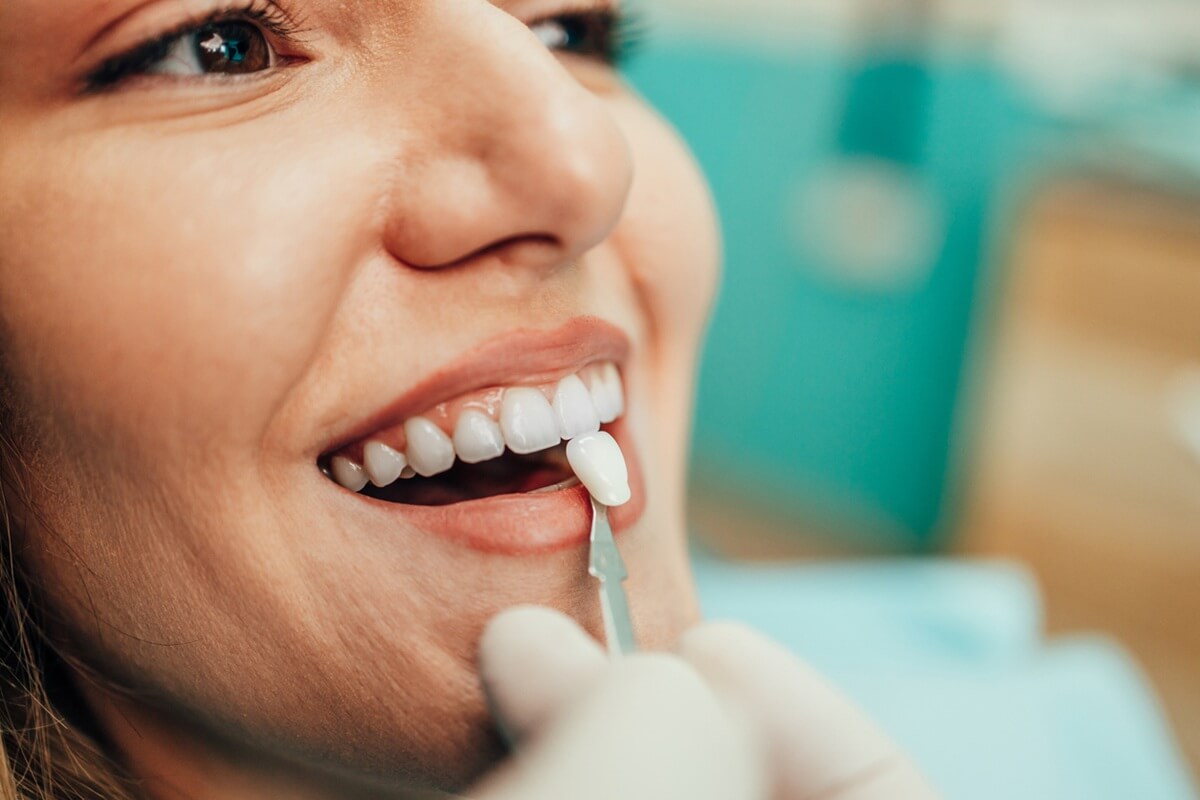
Understanding the Permanent Enamel Preparation Process
One of the most important considerations with veneers is that they are generally irreversible.
To create space for the porcelain restoration, a small amount of natural tooth enamel is usually removed. This process is called enamel reduction or enamel preparation.
Modern cosmetic dentistry emphasizes conservative preparation whenever possible. Ethical treatment planning aims to preserve as much healthy tooth structure as practical while still achieving an excellent aesthetic outcome.
Because enamel does not regenerate, veneer treatment requires careful consideration and comprehensive planning.
Patients should understand that veneers are long-term restorations that may eventually require maintenance or replacement over the course of their lifetime.
The Invisalign Approach: Moving the Root to the Correct Coordinates
Unlike veneers, Invisalign addresses the underlying cause of crooked teeth by physically moving them into healthier positions.
Each set of clear aligners applies gentle, controlled forces that gradually reposition the teeth and roots over time.
This distinction is important because proper dental alignment is about more than appearance. The position of the roots, supporting bone, and bite relationship all contribute to long-term oral health.
Invisalign can effectively treat:
- Crowded teeth
- Gaps between teeth
- Rotations
- Mild to moderate bite issues
- Relapse after previous orthodontic treatment
- Many forms of malocclusion
Patients typically wear aligners for 20 to 22 hours per day, progressing through a series of trays designed specifically for their treatment goals.
Learn more about our Invisalign treatment options on our Invisalign service page.
Correcting Underlying Bite Alignment and Health Issues
One of the greatest advantages of Invisalign is its ability to address functional concerns that veneers cannot solve.
If a patient presents with:
- Overbite
- Underbite
- Crossbite
- Deep bite
- Significant crowding
- Functional malocclusion
then orthodontic treatment is generally the appropriate first step.
These conditions affect how the upper and lower teeth meet during chewing and speaking. Left untreated, they may contribute to:
- Premature tooth wear
- Chipping and fractures
- Gum recession
- Jaw discomfort
- Difficulty cleaning crowded areas
- Increased risk of decay
In these situations, veneers would only camouflage the appearance of crooked teeth while leaving the underlying problem unchanged.
For patients with bite-related issues, Invisalign provides a therapeutic solution that improves both aesthetics and function.
Combined Treatments: The Hidden Value of Pre-Veneer Aligners
One of the most powerful treatment strategies available today combines Invisalign and veneers.
Many patients assume they must choose one or the other. In reality, the best results often come from using both treatments strategically.
Here's why.
By first using Invisalign to improve dental alignment, we can often:
- Reduce the amount of enamel reduction required
- Preserve more natural tooth structure
- Create ideal spacing for restorations
- Improve bite relationships
- Produce more conservative veneer designs
After orthodontic movement is complete, veneers can then be used to refine:
- Tooth shape
- Tooth size
- Colour
- Symmetry
- Minor aesthetic imperfections
This approach frequently delivers superior long-term results while minimizing unnecessary alteration of healthy teeth.
For patients seeking a high-end smile makeover, Invisalign followed by selective veneers can represent the most biologically conservative solution.

Clinical Selection Framework: How Our Dental Team Determines Your Best Path
At Creek View Dental, treatment planning begins with a comprehensive assessment rather than a one-size-fits-all recommendation.
We evaluate:
- Bite Function
- Is there evidence of malocclusion?
- If functional bite issues exist, orthodontic correction usually becomes the priority.
- Degree of Crowding
- Mild crowding may be addressed cosmetically in select cases.
- Moderate to severe crowding generally benefits from orthodontic treatment first.
- Tooth Health
- Existing restorations, enamel quality, wear patterns, and overall oral health influence treatment recommendations.
- Cosmetic Goals
Some patients want the fastest possible transformation; others prioritize preserving natural tooth structure. Understanding these goals helps guide treatment selection.
Long-Term Stability
Moving teeth into healthier positions often provides advantages that extend beyond aesthetics.
For many patients, Invisalign offers improvements in both appearance and oral function that veneers alone cannot achieve.
Combined Treatment Potential
In many cases, the ideal solution isn’t Invisalign or veneers—it is Invisalign and veneers working together.
Our goal is always to recommend the most conservative treatment capable of achieving the desired outcome.
Frequently Asked Questions
Generally, no. Severe crowding usually requires orthodontic alignment first. Attempting to place veneers over significantly crowded teeth may require excessive enamel reduction and can create structural challenges that increase the risk of restoration failure over time.
Orthodontic correction often provides a healthier and more predictable foundation before cosmetic treatment is considered.
Porcelain veneers generally demonstrate excellent long-term stain resistance.
High-quality dental porcelain is less susceptible to staining than natural enamel and typically maintains its colour well over time.
However, Invisalign does not replace natural tooth surfaces. After Invisalign treatment, your natural teeth may still be affected by lifestyle factors such as coffee, tea, red wine, and tobacco use.
The best option depends on whether your primary concern is alignment, colour, or both.
Invisalign vs Veneers for Crooked Teeth: The Bottom Line
When comparing Invisalign vs veneers for crooked teeth, the decision comes down to the nature of the problem.
If your concern is primarily cosmetic—such as minor spacing, slight rotations, or staining—veneers may provide a beautiful and efficient solution.
If you have significant crowding, bite issues, or functional malocclusion, Invisalign is often the required therapeutic foundation because it corrects the underlying tooth position rather than masking it.
For many patients, the most conservative and aesthetic result comes from combining both treatments in a carefully planned sequence.
Rather than guessing which treatment you need, a comprehensive evaluation can reveal the healthiest path toward your ideal smile.
Contact Creek View Dental Today!
Don't guess with your smile architecture. Book an assessment with the cosmetic team at Creek View Dental and discover whether Invisalign, veneers, or a combination approach is right for you.