
Posted on October 20, 2026
Missing multiple teeth can affect how you eat, speak, and feel about your smile. If you're researching All-on-4 dental implants vs traditional bridge options, you may be wondering which treatment offers the best long-term results.
Both can restore your smile, but they work differently. Here's what to know before choosing between them at Creek View Dental in St. Catharines.
How Do All-on-4 Implants and Traditional Bridges Work?
All-on-4 Dental Implants
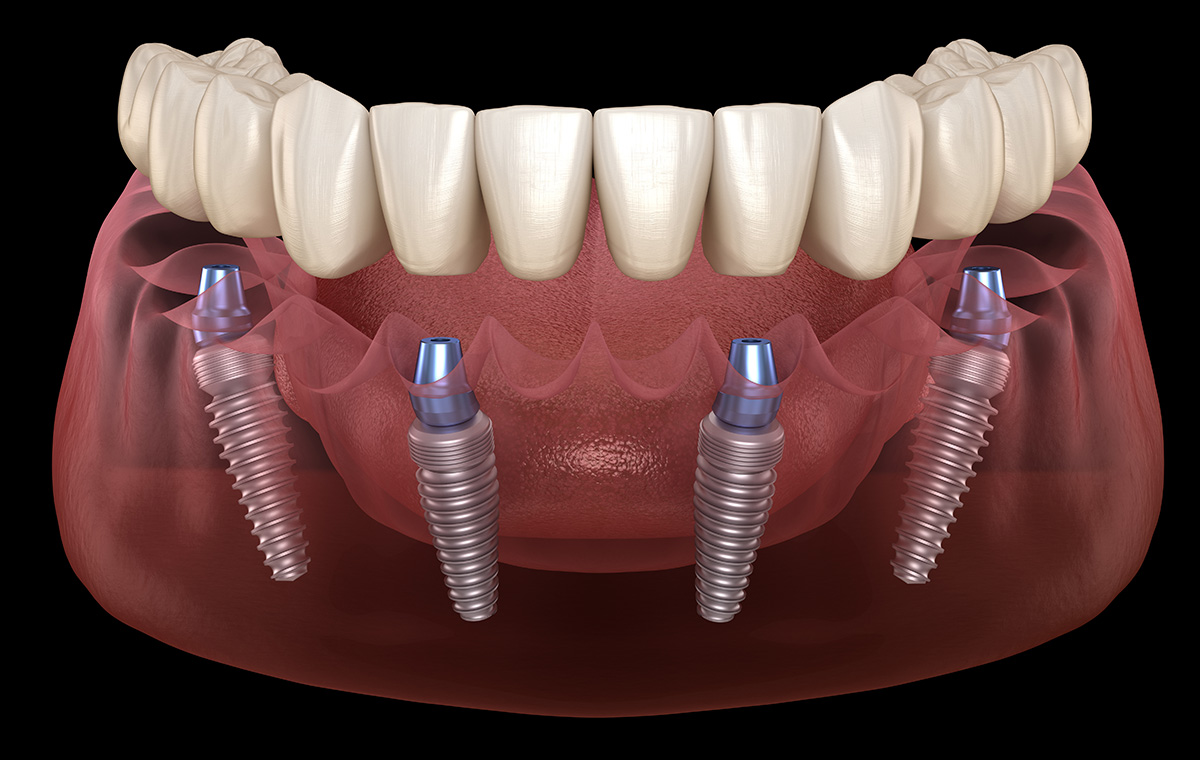
All-on-4 is a full-arch restoration that replaces most or all teeth in your upper or lower jaw using four strategically placed titanium implants. These implants anchor a fixed set of prosthetic teeth directly to the jawbone, creating a stable foundation for eating and speaking.
The rear implants are often angled to make better use of available bone, potentially reducing the need for bone grafting. All-on-4 may be a good option if you have several failing teeth, extensive tooth loss, or want an alternative to removable dentures.
Traditional Dental Bridges
A traditional dental bridge replaces one or more missing teeth by attaching artificial teeth to crowns fitted over neighbouring natural teeth. These supporting teeth, called abutment teeth, must be reshaped to hold the bridge securely.
Bridges are often a practical choice when you're missing a few adjacent teeth and have healthy supporting teeth. Treatment generally takes a few weeks and doesn't require implant surgery.
The main difference? All-on-4 uses implants anchored in your jawbone, while a traditional bridge relies on neighbouring teeth for support.
Jawbone Preservation: Why It Matters
When you lose a tooth, the jawbone beneath it no longer receives the same stimulation from chewing. Over time, this can lead to jawbone resorption, or bone loss.
Dental implants integrate with the jawbone through a process called osseointegration. They help maintain bone around the implant sites, although they cannot prevent all bone loss.
A traditional bridge replaces the visible teeth but not their roots. As a result, the bone beneath the missing teeth may continue to shrink.
For people replacing several or all teeth in an arch, this difference can be an important consideration when planning for long-term oral health.
Are You a Candidate for All-on-4 or a Bridge?
The right treatment depends on your oral health, jawbone condition, and how many teeth need replacing.
Bone Density and Grafting
Your dentist will assess your jawbone to determine whether it can support dental implants. The angled placement used in All-on-4 may reduce the need for extensive bone grafting, but additional procedures may still be necessary.
A traditional bridge doesn't require implants at the missing-tooth site, making it an alternative for some patients who aren't suitable for implant surgery.
The Health of Your Remaining Teeth
Traditional bridges depend on strong supporting teeth. If these teeth have extensive decay, fractures, or weakened gum support, a bridge may not be the best choice.
If your neighbouring teeth already need crowns, a bridge may make sense. If several teeth are failing or an entire arch needs replacing, All-on-4 may be worth exploring.
Periodontal health matters for both treatments. Active gum disease should be treated before proceeding. Your dentist will also consider your medical history, smoking status, and ability to maintain the restoration with daily cleaning and regular checkups.
Cost and Longevity: What Should You Expect?
A traditional bridge generally costs less upfront, particularly when replacing just a few teeth. All-on-4 requires a larger initial investment because it involves implant surgery and a full-arch prosthesis.
Your total cost will depend on the complexity of treatment, materials, extractions, and whether additional procedures are needed. Ask for a detailed estimate that includes temporary teeth, the final restoration, follow-up visits, and anticipated maintenance.
How Long Do They Last?
Traditional dental bridges commonly last around 5–15 years, although some last longer with good care. Their lifespan depends on oral hygiene, bite forces, and the health of the supporting teeth.
Dental implants can remain functional for decades, but the prosthetic teeth and connecting components may need repairs or replacement.
Over 20 years, neither option is guaranteed to be less expensive. A bridge may be cost-effective for a small gap, while All-on-4 may offer long-term value for extensive tooth loss.
Which Option Is Right for You?
All-on-4 may suit you if you:
- Need to replace most or all teeth in an arch.
- Have multiple failing teeth or want a fixed alternative to removable dentures.
- Want replacement teeth supported by implants rather than neighbouring teeth.
- Are comfortable with surgery, healing time, and ongoing maintenance.
A traditional bridge may suit you if you:
- Are missing one or a few adjacent teeth.
- Have healthy supporting teeth, or teeth that already need crowns.
- Prefer to avoid implant surgery.
- Want a restoration that can often be completed within a few weeks.
Neither treatment is automatically better. The best choice depends on your circumstances, oral health, budget, and long-term goals.
Frequently Asked Questions
Explore Your Options at Creek View Dental
Choosing between All-on-4 dental implants and a traditional bridge starts with understanding what your smile needs.
Book a consultation with Creek View Dental in St. Catharines to discuss your options, ask questions, and find a treatment that fits your oral health goals and budget.
Explore our dental implant services and dental bridge services to learn more.